In today's really competitive market, picking the right Liquid Dye for your business can feel pretty overwhelming. Honestly, with so many options out there, it’s super important to focus on quality. Good suppliers offer a variety of high-quality Liquid Dyes that work across different industries—think textiles, crafts, and even food. Brands like Jacquard and Dharma Trading are popular because they give you vibrant colors that really last.
That said, not all Liquid Dyes live up to their promises. Some might fade really fast or give uneven coloring, and let’s be honest, that can really mess with your reputation and customer happiness. So, it’s definitely worth spending some time doing your homework—testing out different products to see what actually works best for your projects.
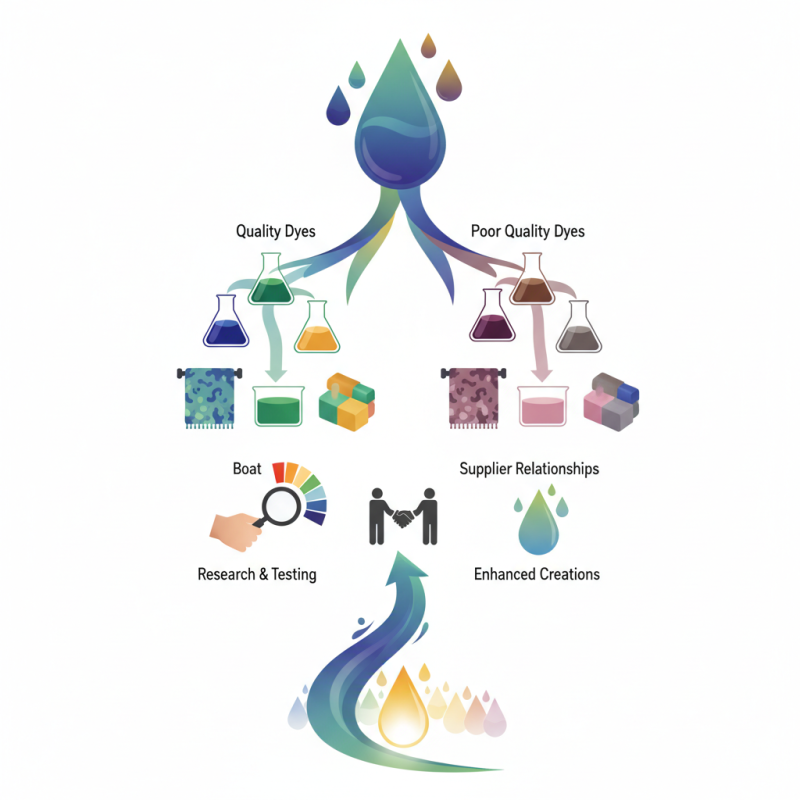
At the end of the day, the Liquid Dye you choose seriously impacts your finished products. So, go for quality, and don’t be shy about asking suppliers for samples. Building a good relationship with trusted companies can open up better options and support down the line. The right Liquid Dye can really make your creations pop and help you stand out in a busy market.
Understanding Liquid Dyes: A Comprehensive Overview
Understanding liquid dyes is essential for businesses in various industries, including textiles, food, and cosmetics. The global liquid dye market is projected to reach over $6 billion by 2025, according to industry reports. This signifies a growing demand for high-quality dyes that can provide vibrant and lasting colors. Liquid dyes offer advantages like easier application and faster absorption compared to powder dyes.
Different types of liquid dyes exist, including reactive, acid, and direct dyes. Reactive dyes bond with fabric fibers, ensuring vibrant colors. Acid dyes work well with protein fibers, while direct dyes are suitable for cellulosic fibers. Each type has unique properties affecting colorfastness and application processes. High-temperature applications, for example, can enhance the vibrancy of certain dyes but may require specialized processes. Issues like dye migration or color variations often arise, highlighting the importance of testing and quality control.
When sourcing liquid dyes, ensure the supplier adheres to industry standards. Quality can vary significantly between manufacturers. Reports suggest that 72% of businesses experience quality-related issues in dye application. Factors such as water quality, pH levels, and mixing procedures can greatly influence dye performance. Investing in quality assurance can mitigate these risks and improve overall product satisfaction. Understanding these intricacies can help businesses make informed decisions.
10 Best Wholesale High-Quality Liquid Dye Options for Your Business
This bar chart illustrates the color saturation levels of various high-quality liquid dyes suitable for wholesale. Each dye is assessed based on its saturation level, which can impact the overall quality of the products produced using these dyes.
Criteria for Selecting High-Quality Liquid Dyes for Wholesale
When selecting high-quality liquid dyes for wholesale, several criteria stand out.
Firstly, the dye's solubility is crucial. Dyes must dissolve uniformly in various mediums.
This ensures consistent color application across products. According to industry reports,
a dye's solubility can significantly affect its performance and stability.
Achieving a uniform application can prevent color inconsistencies.
Another important aspect is the dye's lightfastness.
This indicates how well a color resists fading when exposed to sunlight. Research shows that
high-quality dyes usually exhibit greater lightfastness.
However, not all products claim the same durability. Testing samples before purchasing in bulk can expose discrepancies in longevity.
Finally, consider the environmental impact. Buyers are increasingly focused on eco-friendly options.
Some dyes may contain harmful chemicals that can affect health and safety. While many suppliers claim sustainability,
not all are transparent. Critical evaluation of each option is necessary.
This reflection can guide businesses toward the most responsible choices.
Top Features to Look for in Liquid Dye Products
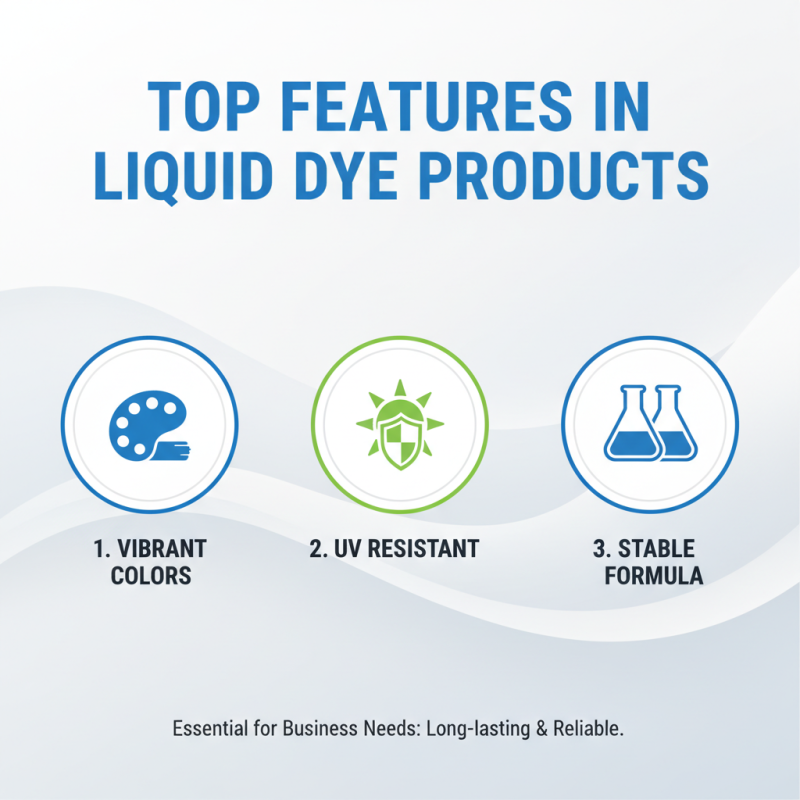
When selecting liquid dye products for business needs, quality matters deeply. High-quality liquid dye should provide vibrant colors that remain stable under various conditions. Look for dyes that are UV resistant. This feature ensures that colors won’t fade quickly, which is essential for products exposed to sunlight.
Consider the solubility of the Liquid Soap Dye. A dye that dissolves easily in water or oil is vital for achieving consistent coloring. Ensure that it mixes well without leaving clumps or floating particles. This characteristic is crucial for products that depend on uniform color throughout their batches. Moreover, pay attention to safety certifications. Utilizing dyes that adhere to industry standards protects both users and the environment.
Performance can vary, so test samples before committing. Check how different concentrations affect the final color and consistency. Some dyes may require more careful handling, complicating production. Don’t overlook the importance of supplier reliability. Partnering with established providers can enhance trust in product quality and consistency over time. Always seek feedback from your team to identify issues with specific dye batches, leading to better choices for future orders.
Ranking the 10 Best Wholesale Liquid Dye Options Available
When choosing liquid dye options for your business, quality is paramount. The dye industry is expected to reach a market value of USD 29.14 billion by 2027, according to industry reports. This growth highlights the increasing demand for high-quality liquid dyes. Retailers must focus on sourcing from reliable suppliers who offer consistent color performance and safety for end consumers.
Many businesses overlook the importance of testing dyes. A small sample can save significant costs later. Run tests on fabrics or candles to ensure the dye meets your expectations. The wrong dye choice can lead to product recalls or poor customer satisfaction. It's essential to investigate the dyeing process, as some options may bleed or fade over time.
Tip: Always check for certifications that demonstrate compliance with safety standards. Moreover, consider the dye's stability and lightfastness. For candle makers, using Liquid Candle Dye can enhance the visual appeal of their products. However, remember that variations in formulations can affect color saturation. Take note of manufacturer recommendations and customer reviews to guide your choice.
Supplier Reviews: Trustworthy Sources for High-Quality Liquid Dyes
Finding trustworthy suppliers for high-quality liquid dyes is essential for any business in the dyeing industry. A recent report indicates that the liquid dye market is projected to reach $5 billion by 2025, suggesting a growing demand. However, not all suppliers meet the necessary quality standards. It’s crucial to evaluate their production methods and raw materials.
One area that can be overlooked is the environmental impact. Many companies use
Liquid Dyestuff
that may not comply with eco-friendly practices. Research shows that 25% of dyeing facilities do not adhere to sustainable standards. This raises questions about the long-term reliability of such suppliers.
Additionally, customer reviews are invaluable. They provide insight into supplier reliability and product quality. Data shows that 70% of businesses prefer suppliers with positive reviews and certifications. When researching, focus on their delivery times, customer service, and return policies. These factors can significantly affect your business's success and ensure that you are using high-quality liquid dyes that enhance your product.
Application Methods: Using Liquid Dyes in Various Industries
Liquid dyes have become integral in various industries due to their versatility and effectiveness. In textiles, for instance, liquid dyes are easier to handle than powders. They allow for better saturation and uniformity. A report by Grand View Research highlights that the global textile dye market was valued at approximately $8.2 billion in 2021, with growth anticipated as more manufacturers adopt liquid dye options.
In the food sector, high-quality liquid dyes enhance product appeal. They are used in everything from beverages to confectionery. According to a study by the Food and Drug Administration, over 30% of food manufacturers prefer liquid dyes for their vivid colors and easy blending properties. However, it’s crucial for businesses to ensure compliance with regulations regarding food safety and color additives.
Industries like cosmetics also benefit from liquid dyes. Their blendability allows for precise color matching in formulations. Yet, challenges exist. Some colors fade over time, affecting product lifespan. Brands need to invest in stability testing to ensure long-lasting results. The ability to adapt application methods can significantly impact production efficacy, leading to potential cost savings and improved product quality.
10 Best Wholesale High-Quality Liquid Dye Options for Your Business
| Dye Type |
Color Range |
Best Applications |
Solvent Type |
Compatibility |
| Acid Dye |
Vibrant colors |
Wool, silk |
Water-based |
Protein fibers |
| Reactive Dye |
Pastel to bright |
Cotton, linen |
Water-based |
Cellulosic fibers |
| Disperse Dye |
Bright colors |
Polyester |
Water-based or solvent |
Synthetic fibers |
| Natural Dye |
Earth tones |
Cotton, wool |
Water-based |
Bio-based |
| Pigment Dye |
Wide spectrum |
Leather, textiles |
Water-based or solvent |
Various substrates |
| Sulfur Dye |
Dark shades |
Cotton |
Water-based |
Cellulosic fibers |
| Vinyl Sulfone Dye |
Vibrant colors |
Wool, nylon |
Water-based |
Protein fibers |
| Cationic Dye |
Bright shades |
Acrylic, nylon |
Water-based |
Synthetic fibers |
| Metal Complex Dye |
Rich colors |
Wool, silk |
Water-based |
Protein fibers |
| Azoic Dye |
Vivid colors |
Cellulosic fibers |
Water-based |
Cotton and blends |
Cost Analysis: Evaluating the Price vs. Quality of Liquid Dyes
Cost analysis is a crucial factor in choosing high-quality liquid dyes for your business, especially Mdf Dye. When evaluating price versus quality, it's essential to note that more expensive dyes often provide
better performance and longevity. For instance, a recent report by the Chemical Industry Association indicated that businesses using premium liquid dyes experienced a 30% reduction in fading over time compared to cheaper alternatives.
Quality can also impact operational costs. A lower-priced dye may seem appealing initially, but if it leads to more frequent reapplications, the long-term costs can outweigh the savings. According to industry studies, businesses investing in higher-quality dyes have reported improved customer satisfaction and reduced returns, which are vital for maintaining profit margins.
Tips:
-
Always request product samples. Testing a small quantity helps assess color fastness and ease of application.
- Consider the type of material your dye targets. Some, like Mdf Dye, may require specific formulations for optimal results.
- Don't overlook customer feedback; it's invaluable for understanding the practical implications of your dye choices.
- Checking data from trade publications can also guide your selections, helping you make informed decisions in a competitive market.
FAQS
: Testing dyes prevents costly issues later. Small sample tests can avoid product recalls and poor customer satisfaction.
Evaluate production methods, raw materials, and customer reviews. Supplier reliability affects product quality and business success.
Liquid dyes are easier to handle than powders. They ensure better saturation and uniformity in textile applications.
Many suppliers may not follow eco-friendly practices. Research indicates some facilities do not adhere to sustainable standards.
High-quality liquid dyes improve product appeal in food industries. They offer vivid colors and are easy to blend into recipes.
Some colors can fade over time. Brands must invest in stability testing to ensure lasting results in their formulations.
Certifications show compliance with safety standards. They help businesses choose reliable dyes and maintain product quality.
Positive reviews build trust in suppliers. Most businesses prefer suppliers with good reviews, impacting purchasing decisions.
Unstable dyes can affect product lifespan and performance. Ensuring stability can save costs and improve overall product quality.
Lightfastness affects color retention over time. Testing can reveal how well dyes hold up in various conditions.
Conclusion
This article provides a comprehensive overview of liquid dyes, particularly focusing on high-quality options available for wholesale. It begins by explaining what liquid dyes are and outlines the essential criteria for selecting premium products, such as colorfastness and versatility. The article also emphasizes the top features to consider, which include solubility and reactivity with different materials.
Furthermore, it ranks the ten best wholesale liquid dye options based on their performance and value, while highlighting reliable suppliers known for their quality. The application methods section discusses how various industries can effectively utilize liquid dyes for different purposes. Finally, a cost analysis is presented, weighing the price against the quality of liquid dyes, aiding businesses in making informed purchasing decisions. This thorough guide serves as a valuable resource for anyone looking to incorporate liquid dyes into their operations.