In today's super competitive textile world, smart business owners are always on the lookout for affordable options that don’t compromise on quality. Finding good, cheap wholesale Sulphur Dye can really make a difference for success. As Dr. Emily Watson, a well-known expert in dye chemistry, points out, "The choice of Sulphur Dye can really affect how well the color sticks and how good the fabric looks overall." Her insights highlight just how important it is to source these dyes carefully.
Getting your hands on Sulphur Dye at wholesale prices isn’t just a matter of finding the lowest deal; it takes a bit of research. You want to make sure you’re working with reputable suppliers so you don’t end up with crappy products that could mess up your business. Picking the right supplier means paying attention to details like how soluble the dye is and what its environmental impact might be. Making an informed choice means your dyeing process will turn out great—looking good and being eco-friendly at the same time.
Even with all the pressure to pinch pennies, remember—quality really matters. It can be tempting to jump into partnerships without doing your homework, but skipping on transparency can come back to bite you. Making sure your suppliers follow ethical practices and respect environmental rules is key. In the long run, committing to quality and sustainability not only boosts your brand’s reputation but also builds trust with your customers. After all, it’s all about creating a business that lasts and makes people feel good about what they’re buying.

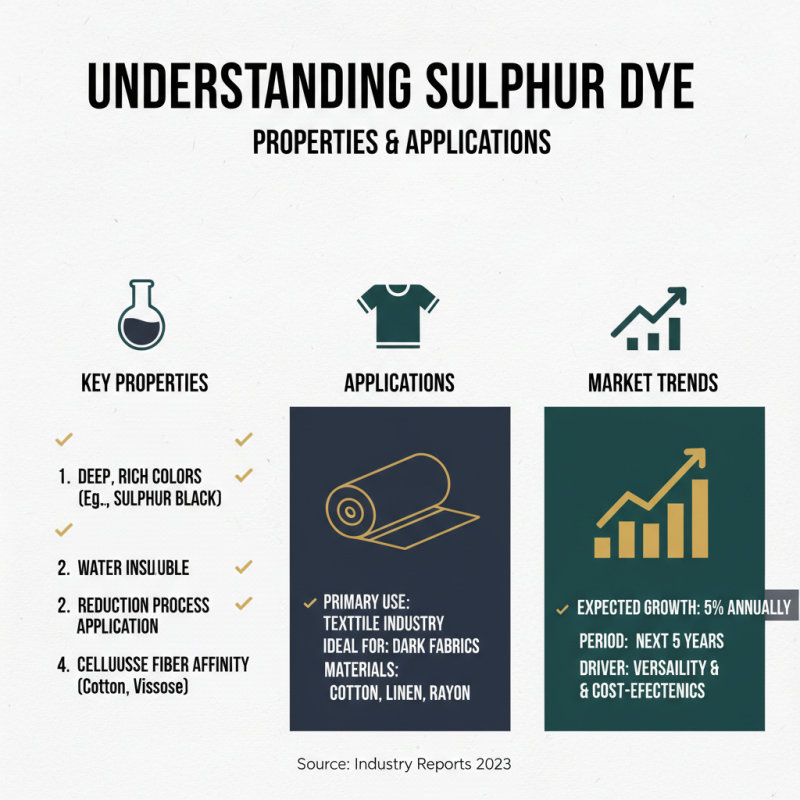
Understanding Sulphur Dye: Properties and Applications
Sulphur dye is widely recognized for its unique properties and versatility in textile applications. It is primarily known for its deep, rich colors, with Sulphur Black being a popular choice for dark fabrics. The dye is insoluble in water but can be applied to fibers through a reduction process, making it an excellent option for cotton and other cellulose-based textiles. Reports indicate that sulphur dye consumption in the textile industry is expected to grow by 5% annually over the next five years.
In terms of sustainability, sulphur dyes present an eco-friendlier option compared to some synthetic dyes. They generate less waste and their application can be tailored to minimize environmental impact. However, the dyeing process requires careful temperature and pH management to achieve the best results. Many manufacturers face challenges in these parameters, leading to inconsistent dye uptake and potentially disappointing colorfastness.
Understanding the specific properties of sulphur dyes, including their light and wash fastness, can significantly influence purchasing decisions. Businesses aiming to optimize their dye usage must also invest in preliminary testing. This approach helps in assessing compatibility with various fabrics. While there is a wealth of information available, continual research and development in this area are essential. The evolving industry dynamics demand that manufacturers stay updated on best practices to meet their customers' expectations effectively.
Identifying Reliable Wholesalers for Sulphur Dye
When looking to buy wholesale sulfur dye, identifying reliable wholesalers is crucial. The global sulfur dye market is projected to reach $1.5 billion by 2026, influenced by growing demands in the textile industry. This statistic highlights the opportunity, but the challenge lies in sourcing from trustworthy suppliers.
Evaluating potential wholesalers involves checking their credentials and industry experience. Look for companies with at least five years in the business. A reliable wholesaler should provide clear product specifications, safety data sheets, and certifications. It's vital to ask for samples to assess quality before committing to a larger purchase. An industry report from Research and Markets reveals that about 30% of introduced suppliers fail in the first two years. This underscores the need for thorough checking.
In recent years, online platforms have transformed how wholesalers connect with buyers. However, they can be misleading. Scams occur frequently. It’s wise to verify reviews and seek references. Organizing trade shows offer direct interaction with suppliers. Face-to-face meetings can establish trust. Remember, the lowest price does not always guarantee quality. Balancing cost with reliable service is essential for a thriving business.
Factors to Consider When Buying Wholesale Sulphur Dye
When considering wholesale sulphur dye purchases, several factors play a crucial role. The quality of the dye is paramount. Research indicates that the market for dyes is expected to grow by 5.6% annually from 2021 to 2026. Buyers must ensure that the dye meets industry standards for colorfastness and solubility. Reliable suppliers should provide detailed product specifications. This information helps businesses make informed decisions.
Another important factor is pricing. Reports show that sulphur dye prices can fluctuate based on global market trends. Understanding the price dynamics helps businesses budget effectively. Comparing multiple suppliers can reveal the best offers. Businesses should also assess the minimum order quantities. Sometimes, suppliers impose high minimums, which may not align with your business needs. Flexibility in order sizes can significantly affect overall costs.
Lastly, it’s essential to consider the supplier's reputation. Check for certifications or industry affiliations. Reliable suppliers often have positive feedback from previous customers. This can provide insight into their reliability. Nonetheless, even reputable suppliers can have varying quality levels. Conducting small trials before committing to larger orders can mitigate risks. This approach allows for an evaluation of the dye performance in practical applications.
Researching Market Prices for Sulphur Dye
Researching market prices for sulphur dye is essential for your business. Understanding the fluctuations in costs will help you make informed purchasing decisions. Start by examining industry reports and online platforms. Many sources offer valuable insights into the current pricing trends for Sulphur Dyestuff. However, be cautious; prices can vary significantly based on quality, quantity, and supplier.
Engaging with industry professionals can also provide deeper insights. Networking at trade shows or online forums may yield information on fair pricing. When negotiating with suppliers, do not hesitate to ask for samples. This will help you assess quality before making large investments. Remember, every supplier has its pricing strategy. It’s important to compare and reflect on what works best for your budget.
Maintaining reliable relationships with your sources ensures better deals in the long run. Be proactive in your research and consistently monitor the market. Prices might not always reflect availability, and sometimes, cheaper does not mean better. In your search for sulphur dyestuff, strive for quality along with cost efficiency. This balancing act can be challenging but essential for your business success.
2026 How to Buy Wholesale Cheap Sulphur Dye for Your Business?
| Color |
Price per Kg (USD) |
Supplier Location |
Quantity Available (Kg) |
Compliance Certification |
| Yellow |
$5.00 |
China |
5000 |
ISO 9001 |
| Blue |
$6.20 |
India |
3000 |
GOTS |
| Red |
$4.75 |
Brazil |
7000 |
OEKO-TEX |
| Green |
$5.50 |
Turkey |
6000 |
REACH |
| Black |
$5.80 |
Pakistan |
8000 |
ISO 14001 |
Negotiating Bulk Purchase Agreements for Sulphur Dye
Negotiating bulk purchase agreements for sulphur dye requires a keen understanding of the market. Start by researching suppliers who specialize in the
Dye And Dye Intermediate Industry. Look for companies with a proven track record in quality and reliability. Engage in conversations with multiple suppliers to gauge variations in quality and price. This research phase is crucial; it lays the foundation for effective negotiation.
Once you identify potential suppliers, focus on building relationships. Trust can lead to better terms. Approach negotiations by clearly stating your requirements. Discuss pricing models, delivery timelines, and payment terms assertively. Consider asking for samples to ensure the quality meets your standards. Be flexible, but also don’t hesitate to address your needs firmly. Sometimes, a supplier may not meet your expectations. Reflect on these interactions to refine your approach in future negotiations.
Contracts should detail every agreement made. Be vigilant about including clauses for quality control and penalties for late deliveries. This level of detail is essential for protecting your business’s interests. Understanding the nuances of negotiations can be challenging. Regularly reviewing past agreements can help identify areas for improvement. This reflection is vital for adapting strategies in the sulphur dye market.
Quality Assurance and Testing for Sulphur Dye Purchases
When purchasing wholesale sulphur dye, quality assurance and testing are crucial. The sulphur dye market has seen a steady growth of approximately 4.2% CAGR according to recent industry reports. However, not all suppliers adhere to the same standards. Buyers must be vigilant in evaluating product quality.
Inquire about the supplier's testing procedures. Reliable suppliers should conduct comprehensive tests on their Mdf Dye. Investigate if they utilize methods like spectrophotometry or chromatography. These techniques ensure that the dye meets colorfastness and application standards. Nevertheless, inconsistencies can arise from batch variations, even with reputable sources. It is essential to request samples before placing larger orders.
Documentation should accompany every purchase. Look for certificates of analysis that validate the dye’s performance and composition. Such documentation builds trust between buyers and suppliers, ensuring compliance with regional safety regulations. However, discrepancies can occur. The onus is on businesses to verify that the received product matches the specifications promised. Remaining proactive in quality assurance will mitigate risks and foster long-term partnerships in the sulphur dye market.
Wholesale Cheap Sulphur Dye Price Trends in 2023
This chart displays the average price per kilogram of wholesale sulphur dye across various suppliers in 2023. The data reflects a price range based on quality standards and testing results for sulphur dyes, indicating market fluctuations.
Logistics and Shipping: Getting Sulphur Dye to Your Business
When sourcing wholesale sulfur dye, logistics and shipping are critical factors. Selecting the right shipping method can significantly influence your cost and delivery time. Common options include air freight, sea freight, and road transport. Air freight is faster but often more expensive. Sea freight provides a cost-effective solution, though it takes longer. Evaluating your business needs helps you choose wisely.
Proper packaging is also vital in the shipping process. Sulfur dye can be sensitive to environmental conditions. Use moisture-proof and sturdy packaging to prevent damage during transit. Collaborate closely with your suppliers to ensure that labeling and documentation meet regulations and standards. Missteps in labeling can lead to delays, costing your business time and money.
Considerations don’t stop at shipping. Customs clearance can be a hurdle. Understanding import regulations for sulfur dye in your region helps avoid unexpected delays. Working with an experienced freight forwarder may simplify this process. They can guide you through required documentation and local laws. However, remember that shipping logistics can sometimes feel overwhelming. Reflecting on past shipping challenges can lead to more efficient processes in the future.
Unlocking the Potential of Dye Intermediates: Insights from 2023 Global Market Trends and China's Quality Manufacturing Capacity
Dye intermediates play a crucial role in various industrial applications, acting as essential building blocks in the production of dyes and organic pigments. These chemical compounds, primarily derived from aromatic hydrocarbons, have evolved over time to serve an array of sectors including pharmaceuticals, pesticides, resins, and plastics. The growing demand for dye intermediates can be attributed to their versatility and efficiency, making them invaluable across multiple industries.
In 2023, global market trends indicate a significant uptick in the utilization of dye intermediates, particularly in regions with advanced manufacturing capabilities. China's commitment to quality manufacturing has positioned it as a key player in supplying high-quality dye intermediates. Manufacturers in this region are focused on not just meeting, but exceeding the varying needs of businesses worldwide. By leveraging state-of-the-art techniques and stringent quality control measures, Chinese suppliers are able to provide reliable products that enhance performance and offer tremendous value for production processes.
With the continuous advancements in chemical technology, the potential applications for dye intermediates continue to expand. Industries are increasingly seeking innovative solutions that not only fulfill their production requirements but also contribute to sustainable practices. The insights derived from 2023 market trends highlight the importance of sourcing dye intermediates from established manufacturers who prioritize quality and innovation, ensuring that businesses remain competitive in a rapidly evolving marketplace.
FAQS
: Sulphur dye is known for its deep, rich colors and versatility in textiles.
It is applied through a reduction process, making it suitable for cellulose-based textiles like cotton.
Sulphur dyes generate less waste and can be tailored for minimal environmental impact during dyeing.
Proper temperature and pH management are crucial for consistent dye uptake and colorfastness.
It helps assess compatibility with various fabrics, ensuring optimal dye usage and results.
Prices can fluctuate based on global market trends, impacting budgeting for businesses.
Evaluate the supplier's reputation, certifications, and customer feedback for reliability.
Testing methods like spectrophotometry or chromatography ensure the dye meets application standards.
Certificates of analysis validate the dye's performance and compliance with safety regulations.
Variations in batch quality can occur, so requesting samples before larger orders is advisable.
Conclusion
When considering the procurement of wholesale Sulphur Dye for your business, it’s crucial to understand its properties and various applications in industries such as textiles. Identifying reliable wholesalers is key, as it ensures the quality and consistency of the dye. Factors such as price, terms of sale, and the reputation of suppliers should be carefully assessed before making purchases.
Additionally, researching market prices for Sulphur Dye can provide leverage when negotiating bulk purchase agreements. It is also important to conduct quality assurance and testing to ensure compliance with industry standards. Finally, logistics and shipping must be planned efficiently to ensure timely delivery of Sulphur Dye to your business, enabling smooth operational processes.