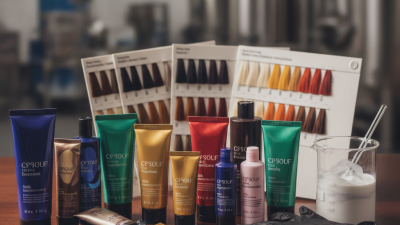
China has really stepped up as a major hub for global beauty brands on the hunt for reliable hair dye producers. Their factories are serving private labels, doing contract manufacturing, and exporting across Asia, Europe, North America, and the Middle East. According to Grand View Research, the worldwide hair color market hit around USD 29.14 billion in 2023. And guess what? It’s expected to keep growing through 2030, fueled by demand for higher-end products, gray hair coverage, and easy-at-home coloring options. The market’s definitely expanding, but consumers are getting pickier, with higher expectations for quality and safety.
This guide is a quick tour through ten Chinese manufacturers, each with their own strengths. Some are great at permanent color systems, while others focus on semi-permanent formulas, hair mascaras, or plant-based alternatives. When choosing, it’s important to look at things like formulation skills, shade variety, factory size, packaging options, and experience with export markets. Certifications matter too — manufacturing standards based on ISO 22716 can really help ensure consistent quality. But, of course, you should still do your own diligence — check test reports, ingredient lists, batch records, and ensure they meet your target market’s regulations.
And let’s be real — no single ranking is perfect. A huge factory might not be the best choice if you’re just starting out small. Similarly, a quote that’s super low could be hiding extra costs down the line for testing or packaging. Industry reports from Mordor Intelligence and Euromonitor show that consumers are increasingly interested in safety, convenience, and personalized colors, which are trends worth keeping in mind. But don’t forget — market reports can’t replace factory visits or testing samples yourself. Sometimes, what works in the lab doesn’t quite match up with mass production, so due diligence is key. So, in short, this list of the “top ten” is really just a practical starting point, not some final verdict. When picking a long-term hair dye supplier, it’s all about comparing the evidence carefully — because in the end, trust is everything.
China’s Hair Dye Industry in Numbers: 2024 Market Size and CAGR
China Top 10 Hair Dye Manufacturers for Global Buyers
China’s Hair Dye Industry in Numbers: 2024 Market Size and CAGR
China’s hair dye market was estimated at about USD 1.8 billion in 2024. Industry reports place its annual growth rate near 6% to 7%. Figures vary because some studies include professional salon products, while others count only retail sales. That difference matters. The market continues expanding through demand for gray coverage, fashion shades, and convenient home-use kits. Export orders also support production, especially for semi-permanent and oxidative color products. Yet growth is not automatic. Buyers increasingly request stable formulas, clear ingredient records, and reliable batch testing.
Tips: Ask manufacturers for recent production samples, certificates of analysis, and shade-retention data. Check whether their quality team tests viscosity, pH, microbiological safety, and packaging leakage. A factory visit can reveal more than a polished catalog. Request third-party testing for unfamiliar formulas. Small details matter.
For global buyers, the estimated CAGR offers direction, not a guarantee. Exchange rates, ingredient costs, packaging rules, and consumer preferences can quickly change margins. Some suppliers may quote impressive capacity figures without showing actual export experience. I would compare three years of production records, complaint rates, and delivery performance before selecting a partner. The industry looks promising, but market-size data remains imperfect. Practical verification should guide purchasing decisions.
China Top 10 Hair Dye Manufacturers for Global Buyers - China’s Hair Dye Industry in Numbers: 2024 Market Size and CAGR
| No. |
Industry Metric |
2024 Figure |
Unit / Scope |
Relevance for Global Buyers |
| 1 |
Estimated China hair-dye market value |
US$2.4–3.1 billion |
Retail value; hair-color products only |
Indicates the scale of domestic demand and supplier capacity. |
| 2 |
Estimated market CAGR |
5%–7% |
2024–2029 forecast range |
Shows a moderately growing market rather than a mature, declining category. |
| 3 |
China population |
1.408 billion |
Year-end resident population |
Provides a large consumer base for both at-home and professional coloring. |
| 4 |
Urbanization rate |
67.00% |
Permanent urban population share |
Supports modern retail, e-commerce and salon distribution networks. |
| 5 |
Per-capita disposable income |
RMB 41,314 |
Annual national average |
Rising purchasing power supports premium, ammonia-free and treatment-color products. |
| 6 |
At-home coloring segment |
Approximately 65%–75% |
Estimated share of consumer hair-color sales |
Favors ready-to-use kits, easy application and multilingual packaging. |
| 7 |
Professional and salon segment |
Approximately 25%–35% |
Estimated share of consumer hair-color sales |
Requires stable shade performance, technical documentation and bulk formats. |
| 8 |
Key product formats |
Cream, foam, shampoo-color and powder |
Common manufacturing categories |
Enables buyers to match product texture and application method to local markets. |
| 9 |
Common export classification |
HS 3305.90 |
Other preparations for use on the hair |
Useful for preliminary customs research, although the code is not hair-dye specific. |
| 10 |
Main buyer verification requirements |
GMP, ISO 22716, SDS, COA and stability data |
Typical international compliance documents |
Helps buyers screen suppliers before product registration and import approval. |
Note: China does not publish a standalone official statistical category for hair-dye products. The 2024 market-size and CAGR figures are therefore presented as a consolidated range from publicly reported market-research estimates; results vary according to whether professional products, color shampoos and related hair-color treatments are included. Population, urbanization and income figures follow China’s National Bureau of Statistics 2024 data. HS 3305.90 is a broader customs category and should not be treated as hair-dye-only trade data.
How the Top 10 Were Ranked: UN Comtrade, Capacity, MOQ, and Certifications
China Top 10 Hair Dye Manufacturers for Global Buyers
The top ten were ranked through a practical, evidence-based review. UN Comtrade data helped identify China’s major export activity in Hair Dyestuff and related products. However, trade data can hide product differences. It should not be treated as a complete quality score.
Manufacturing capacity was checked through production lines, monthly output, equipment, and audit records. MOQ also mattered because large minimum orders can burden smaller importers. Certifications, safety testing, ingredient traceability, and factory quality systems received strong attention. Documents were checked against current supplier information, not copied from old listings. No ranking is flawless. Some factories may improve after publication, while others may report capacity too optimistically.
Tips: Request recent certificates, batch test reports, and a sample order before signing a contract. Compare MOQ with your expected sales, not only the quoted unit price. Ask how the factory controls shade consistency under different lighting. This small detail can prevent costly complaints. Keep written specifications for ingredients, packaging, labeling, and delivery terms. A video tour helps, but an independent audit is more reliable. Experienced buyers should still review import rules in their destination market. Data supports judgment. It does not replace it.
Manufacturer Profiles: OEM/ODM Products, Output Scale, and Export Markets
China Top 10 Hair Dye Manufacturers for Global Buyers
A practical review of China’s top ten hair dye manufacturers should examine more than product catalogs. Each profile should explain OEM and ODM capabilities, factory experience, output scale, and export markets. Some factories focus on private-label cream color, while others develop shampoos, masks, and temporary color products. Their technical teams may adjust shade depth, fragrance, packaging, and application texture for different markets.
Output varies widely. Smaller producers often support pilot orders and flexible packaging. Larger facilities may operate several filling lines and handle stable, high-volume orders. Buyers should request production records, batch controls, ingredient specifications, and independent quality documents. Export experience also matters. A manufacturer shipping regularly to Europe, North America, Southeast Asia, or the Middle East may understand labeling and documentation better. However, export claims need verification. A polished website is not enough.
Tips: Ask for samples from two production batches. Compare color consistency, odor, cream texture, and package sealing. Confirm minimum order quantities, lead times, inspection procedures, and formula ownership in writing. Factory visits can reveal practical details, such as warehouse humidity, worker hygiene, and unfinished cartons. Some manufacturers promise fast development but respond slowly after sampling. That is a warning sign. Cost remains important, yet the cheapest quotation may hide weaker testing or limited after-sales support.
This chart summarizes capability coverage across a ten-profile manufacturer set. Values represent the number of anonymous manufacturers associated with each OEM/ODM product capability, not market share or sales volume.
Product Technology Compared: Permanent, Semi-Permanent, and Plant-Based Dyes
China Top 10 Hair Dye Manufacturers for Global Buyers
Product Technology Compared: Permanent, Semi-Permanent, and Plant-Based Dyes
Permanent hair dyes use oxidation chemistry to create lasting color inside the hair shaft. They usually provide stronger gray coverage and wider shade development. Developers often contain hydrogen peroxide, while alkaline agents open the cuticle.
Semi-permanent dyes use direct pigments and generally deposit color near the surface. They fade gradually after repeated washing. This option suits fashion shades, lower commitment, and frequent shade changes. Results still depend on porosity, water quality, and processing time.
Plant-based dyes use materials such as henna, indigo, or botanical extracts. Their color can feel softer, but shade control may be less predictable. Raw-material variation matters. A reliable manufacturer should provide batch records, ingredient specifications, stability data, and microbiological testing.
Buyers should also compare pigment loading, gray-coverage tests, packaging compatibility, and technical support. The Dye And Dye Intermediate Industry increasingly values traceability, yet some product claims remain vague. That deserves scrutiny.
Tips: Request laboratory samples from several manufacturers. Test them on bleached, gray, and untreated hair swatches. Record color before washing and after ten wash cycles. Check safety documents, allergen declarations, and local cosmetic requirements before purchase. Patch testing is essential, even with botanical formulas. A supplier may offer an attractive shade card, but real hair can disagree. That is where careful validation matters.
Safety Benchmarks: ISO 22716, EU Regulation 1223/2009, and CPSR Data
China Top 10 Hair Dye Manufacturers for Global Buyers
For global buyers, factory ranking means little without safety evidence. ISO 22716 provides good manufacturing practice guidance for cosmetic production. It covers hygiene, batch control, complaints, storage, and traceability. A serious supplier should show current certification and explain its audit scope.
EU Regulation 1223/2009 requires a Responsible Person, Product Information File, notification, and a Cosmetic Product Safety Report (CPSR) before sale. The CPSR should identify ingredients, exposure conditions, toxicological data, impurities, stability, and microbiological quality. Hair dye assessments need special care because oxidation dyes contact the scalp. The European Commission’s Safety Gate 2023 report listed cosmetics among the most frequently notified product categories, representing about 32% of alerts. That figure is a warning, not a simple ranking. Documentation can look complete while testing remains weak.
Tips: Ask for an anonymised CPSR sample, recent batch records, raw-material specifications, and challenge-test results. Confirm that the safety assessor is suitably qualified. Check whether the formula matches the tested sample. Small details matter.
Experienced buyers should also review change-control procedures. A supplier changing fragrance, dye intermediate, or packaging may require a new assessment. No factory is flawless. Even a certified site can miss a labeling inconsistency or incomplete impurity record. Independent laboratory verification adds useful distance. It costs more, but it can expose assumptions before shipment. Industry guidance from ISO 22716 and scientific opinions published by the EU’s SCCS should support, not replace, buyer judgment.
Buyer Economics: MOQ, Lead Time, Unit Cost, and Private-Label Margins
For global buyers, supplier economics often matter more than a glossy product sample. Industry reports from Grand View Research estimate the global hair color market could grow at about 8% annually through 2030. That growth attracts factories, but not every quotation is efficient. Typical private-label MOQs range from 1,000 to 10,000 units. Smaller orders usually increase packaging and formula costs. Indicative unit pricing can range from US$1.20 to US$3.80, depending on volume, claims, bottle type, and testing requirements.
Lead times commonly reach 45–90 days after artwork approval. Custom shades may add two or three weeks. Buyers should request stability data, microbiological results, batch samples, and a clear ingredient specification. These documents demonstrate professional control, not just sales confidence. Private-label gross margins may reach 40–65% at retail, according to common beauty-industry benchmarking, but freight, duties, marketplace fees, and unsold stock reduce the real return. My own costing mistake would be ignoring carton volume. A low unit price can still create expensive freight.
Tips: Compare landed cost, not factory price. Ask for three MOQ scenarios. Negotiate split deliveries when possible. Confirm whether testing fees are refundable. Also check terminology carefully. “Textile Direct Dye Direct Brown dye” relates to textile coloration, not a compliant hair-color product. Some supplier listings mix these categories. That deserves a second review.
Due Diligence Checklist: Testing Reports, Factory Audits, and Supply Risks
Global buyers assessing China’s top hair dye manufacturers need evidence beyond polished samples. Request recent certificates of analysis, batch test results, stability data, microbial limits, heavy-metal screening, and allergen controls. For oxidative dyes, verify testing for PPD and related sensitizers under the destination market’s rules. ISO 22716 certification supports cosmetic good manufacturing practice, but it does not replace product-specific testing.
Factory audits should inspect mixing tanks, filling lines, retained samples, calibration logs, worker training, and complaint records. Ask for batch traceability from raw material receipt to carton loading. The European Commission’s 2023 Safety Gate report identified cosmetics as 32% of reported dangerous-product alerts. That figure makes document verification practical, not ceremonial. When assessing an Mdf Dye supplier, check whether reports match the exact formula, factory address, production date, and tested batch. I have seen impressive reports fail this simple comparison.
Tips: Use an independent laboratory when risk is high. Audit before payment. Review the last three batches. Confirm minimum order quantities, backup raw-material sources, capacity during peak seasons, and written change-control procedures. A second factory may reduce disruption, but it can create inconsistent shade performance. That trade-off needs testing. Also request shipping records, recall procedures, and insurance details. A supplier may promise stable lead times, yet a single pigment shortage can delay production for weeks. Supplier declarations help, but they are not proof.
FAQS
Check OEM and ODM experience, factory history, production capacity, and export markets. A polished catalog proves little. Request records, specifications, and independent quality documents.
Smaller factories may accept pilot orders and flexible packaging. Larger facilities often manage several filling lines and higher volumes. Confirm actual capacity. Do not rely only on stated output.
Request samples from two separate production batches. Compare color, odor, cream texture, and package sealing. Test bleached, gray, and untreated hair. Real hair may disagree with the shade card.
Permanent dyes use oxidation chemistry and usually provide stronger gray coverage. Semi-permanent dyes deposit direct pigments near the surface. Semi-permanent color fades gradually. Porosity and washing habits affect results.
Not necessarily. Botanical materials can produce softer color, but raw-material variation may affect shade consistency. Ask for ingredient specifications, stability data, and microbiological tests. Patch testing still matters.
Request recent certificates of analysis, batch results, stability data, microbial limits, heavy-metal screening, and allergen controls. Check that every report matches the formula, factory, date, and tested batch. A document can look impressive and still be incomplete.
Inspect mixing tanks, filling lines, retained samples, calibration logs, worker training, and complaint records. Trace materials from warehouse receipt to carton loading. Unfinished cartons can reveal practical problems.
Confirm minimum orders, lead times, inspection steps, backup material sources, and written change controls. Review the last three batches. An independent laboratory may help. A second factory reduces disruption but may change shade performance. Test that trade-off.
Conclusion
China’s Hair Dye industry offers global buyers a broad range of permanent, semi-permanent, and plant-based products, supported by large-scale production, flexible OEM/ODM services, and established export capabilities. This article explains how the top manufacturers are evaluated through trade data, production capacity, minimum order quantities, certifications, product technology, and overseas market coverage. It also compares key safety benchmarks, including ISO 22716, EU Regulation 1223/2009, and Cosmetic Product Safety Report requirements.
Buyers will gain practical guidance on MOQ, lead time, unit cost, private-label margins, and the factors that influence total sourcing value. The article also provides a due diligence checklist covering ingredient documentation, testing reports, factory audits, quality-control systems, and supply-chain risks. By combining market analysis with operational and compliance considerations, it helps importers identify suitable manufacturing partners and make more informed, transparent purchasing decisions.