

In today’s fast-paced textile industry, the importance of textile auxiliaries is really growing. These chemicals play a big role in boosting the performance and overall quality of textiles, so they’re pretty much a must-have for manufacturers. Looking ahead to 2026, it’s super important for businesses to identify the top-quality textile auxiliaries manufacturers in China — finding reliable partners can make a big difference.
China’s market for textile auxiliaries is huge and pretty competitive. There are quite a few companies that really stand out because they focus on innovation and quality. For example, companies like DYM Chemical Co., Ltd., and Huntsman Corporation are using cutting-edge tech to produce effective auxiliaries for different uses. But, not every manufacturer is up to the same standards — some might promise more than they can deliver when it comes to product performance. Doing your homework and carefully picking partners can really pay off.
Of course, the world of textile auxiliaries isn’t all smooth sailing. Companies face challenges like fluctuating raw material costs and changing regulations. Working with reputable suppliers is essential to weather these issues. It’s smart to look into a supplier’s track record and read customer reviews before making any decisions. Sustainability is also becoming a big deal now, leading to a flatter shift towards eco-friendly textile auxiliaries that are better for the planet.

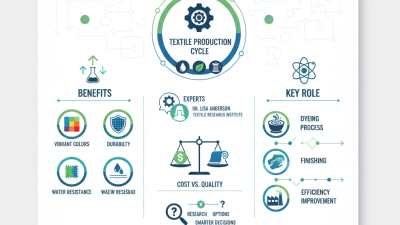
Textile auxiliaries play a crucial role in the textile manufacturing process. These chemicals enhance the quality and efficiency of production. For instance, according to a recent industry report, the global textile auxiliary market is projected to grow at a CAGR of 4.5% from 2022 to 2027. This growth highlights the increasing importance of
Textile Dyeing Auxiliaries
and other additives in manufacturing.
These auxiliaries help in various stages, including dyeing, finishing, and printing. They improve color fastness, reduce water consumption, and enhance fabric properties. It's noteworthy that about 20% of water used in textile production ends up in wastewater. Properly formulated textile dyeing auxiliaries can help mitigate this issue, but many manufacturers struggle with compliance and sustainability.
The challenge lies in balancing performance and environmental impact. Many traditional auxiliaries are effective but can be harmful. Companies must innovate to find solutions that are both functional and eco-friendly. This ongoing struggle demonstrates the need for continued research and improvement in this vital sector of the textile industry.
When evaluating high-quality textile auxiliaries manufacturers, it's essential to consider several key criteria. One primary factor is the manufacturer's adherence to international quality standards. According to a 2023 industry report, around 70% of leading manufacturers meet or exceed ISO certifications. This compliance ensures that their products are reliable and safe for various textile applications.
Another vital aspect is innovation in product development. High-quality manufacturers invest in research to create advanced Textile Printing Auxiliaries. This allows them to offer solutions tailored to modern textiles. A recent survey noted that about 60% of leading manufacturers focused on sustainable practices. This shift not only meets consumer demand but also contributes to environmental preservation.
Lastly, customer feedback plays a significant role in evaluating manufacturers. Gathering insights from clients helps identify the effectiveness of textile auxiliaries in production processes. A report indicated that over 55% of users value prompt and effective customer service. Manufacturers that prioritize communication typically achieve better long-term relationships with their clients, reflecting their commitment to quality and reliability.
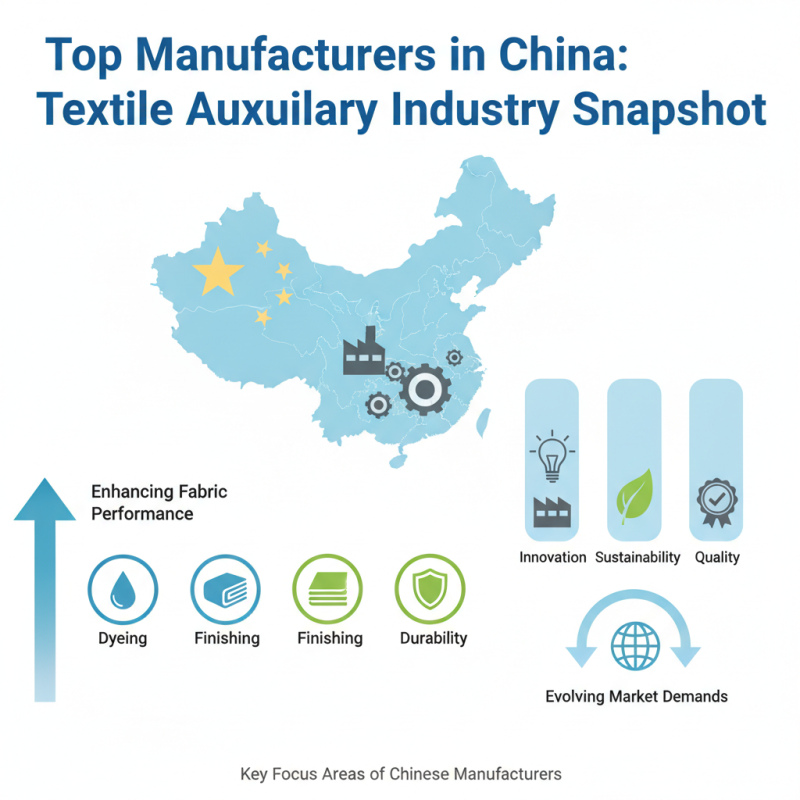
The textile auxiliary industry in China is vast and diverse. It plays a crucial role in enhancing fabric performance. Auxiliary materials improve dyeing, finishing, and overall textile durability. Manufacturers focus on innovation, sustainability, and quality. Their products meet the evolving demands of the market.
When choosing a manufacturer, consider their experience and expertise in the field. Verify quality certifications and client reviews. This helps ensure reliability. Also, pay attention to their sustainability practices. Eco-friendly suppliers can contribute to a greener textile industry.
Networking can be beneficial. Attend industry trade shows to meet potential suppliers. You may discover unique products and technologies. It's important to observe how manufacturers address industry challenges. Learning from their approaches can inspire your own business strategies.
The textile industry in China is flourishing, particularly in the segment of textile auxiliaries. Innovative products are key to enhancing the quality and efficiency of textile manufacturing. In 2022, the market for
Textile Chemicals And Auxiliaries was valued at approximately USD 30 billion, with a projected growth rate of 6% annually.
Leading manufacturers in China focus on sustainable and eco-friendly solutions. This focus aligns with global trends towards environmentally responsible sourcing. There is a rising demand for
biodegradable and non-toxic textile auxiliaries. This trend reflects a significant shift in consumer preferences. However, not all manufacturers can keep pace with these evolving standards, raising concerns about quality consistency.
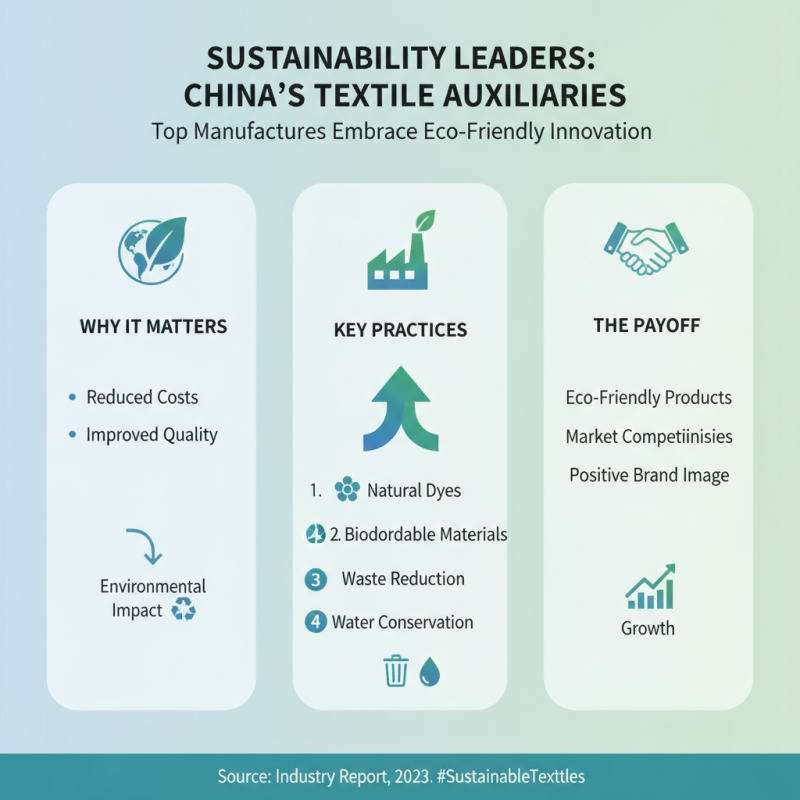
Sustainability is becoming critical in the textile auxiliary industry. Top manufacturers in China are increasingly adopting eco-friendly practices. They recognize that sustainability can reduce costs and improve product quality. More factories are using natural dyes and biodegradable materials. This shift helps to minimize environmental impact.
However, challenges remain. Not all companies fully embrace these practices. Some may focus on compliance rather than genuine change. This can lead to greenwashing, where companies exaggerate their efforts. Additionally, the supply chain must support these initiatives, which can complicate implementation. Manufacturers must evaluate their partners to ensure sustainability throughout the production process.
Transparency is essential. Consumers are more informed and demand accountability. Companies need to share their sustainability metrics. This builds trust with their audience. Engaging both employees and suppliers in sustainable practices can strengthen commitment. Changing a company's culture is no easy feat, but it's necessary for long-term success.
As we approach 2026, the landscape of textile auxiliaries is evolving. Key trends indicate a shift towards sustainability and eco-friendly solutions. Manufacturers are focusing on biodegradable and non-toxic materials, responding to consumer demands for greener products. Dye Auxiliaries play a crucial role in this transformation. They help in achieving vibrant colors while minimizing environmental impact.
In addition, technology integration is on the rise. Innovations in digital printing and automated dyeing processes are enhancing efficiency. This allows manufacturers to produce textiles with greater precision and less waste. However, the challenge remains in balancing innovation with traditional practices. Some companies might struggle to adapt, which can lead to inconsistencies in quality.
Education and training are vital as industries navigate these changes. Workforce development in textile chemistry is needed to understand new methods. Investing in talent can drive advancements in dye auxiliaries, making sure the industry stays competitive. Observing these trends will be essential for companies aiming to thrive in the textile auxiliaries market by 2026 and beyond.
The textile auxiliary market has seen remarkable developments in recent years. Various manufacturers in China have introduced innovative products that enhance fabric performance. One notable case involves a water-repellent treatment that drastically improves the durability of outdoor apparel. This treatment not only sustains its effectiveness after multiple washes but also maintains breathability, making it suitable for active wearers.
Another interesting example is the eco-friendly dyeing additive. It reduces water usage significantly during the dyeing process while providing vibrant colors. However, consistency remains an obstacle. Some users noted variations in color intensity, showing that further refinement is needed. This highlights an area for improvement and innovation within the industry.
A third case study features a softening agent that enhances the tactile feel of fabrics. While it performs well initially, users reported that its softness diminishes over time. This inconsistency calls for deeper exploration and research. The evolving landscape of textile auxiliaries emphasizes the balance between innovation and reliability in product performance.
: The market was valued at approximately USD 30 billion in 2022.
Yes, many are adopting eco-friendly practices and using biodegradable materials.
Always look for verified certifications and third-party testing to ensure trustworthiness.
Some companies may engage in greenwashing, exaggerating their eco-friendly efforts.
Informed consumers demand accountability, and transparency builds trust.
They help achieve vibrant colors while minimizing environmental impact.
A shift toward eco-friendly solutions and technology integration is anticipated.
Balancing innovation with traditional practices can lead to quality inconsistencies.
Investing in education and training in textile chemistry is crucial.
Embracing sustainability while maintaining product quality is essential.
The article "2026 Top High Quality Textile Auxiliaries Manufacturers in China" provides a comprehensive overview of textile auxiliaries and their critical role in the textile manufacturing industry. It highlights the criteria for evaluating high-quality manufacturers, emphasizing factors such as product innovation, sustainability practices, and market responsiveness.
Moreover, the article offers insights into the current landscape of the textile auxiliary industry in China, showcasing innovative products and successful case studies. As we look towards 2026 and beyond, it discusses emerging trends that are likely to shape the future of textile auxiliaries, underlining the importance of sustainability and technological advancements in fostering growth and efficiency in manufacturing processes.